Meet the Lens

This page introduces why disability matters in daily life and how stepping into the lens reveals more compassionate voices, shared challenges, and opportunities for inclusive communities.
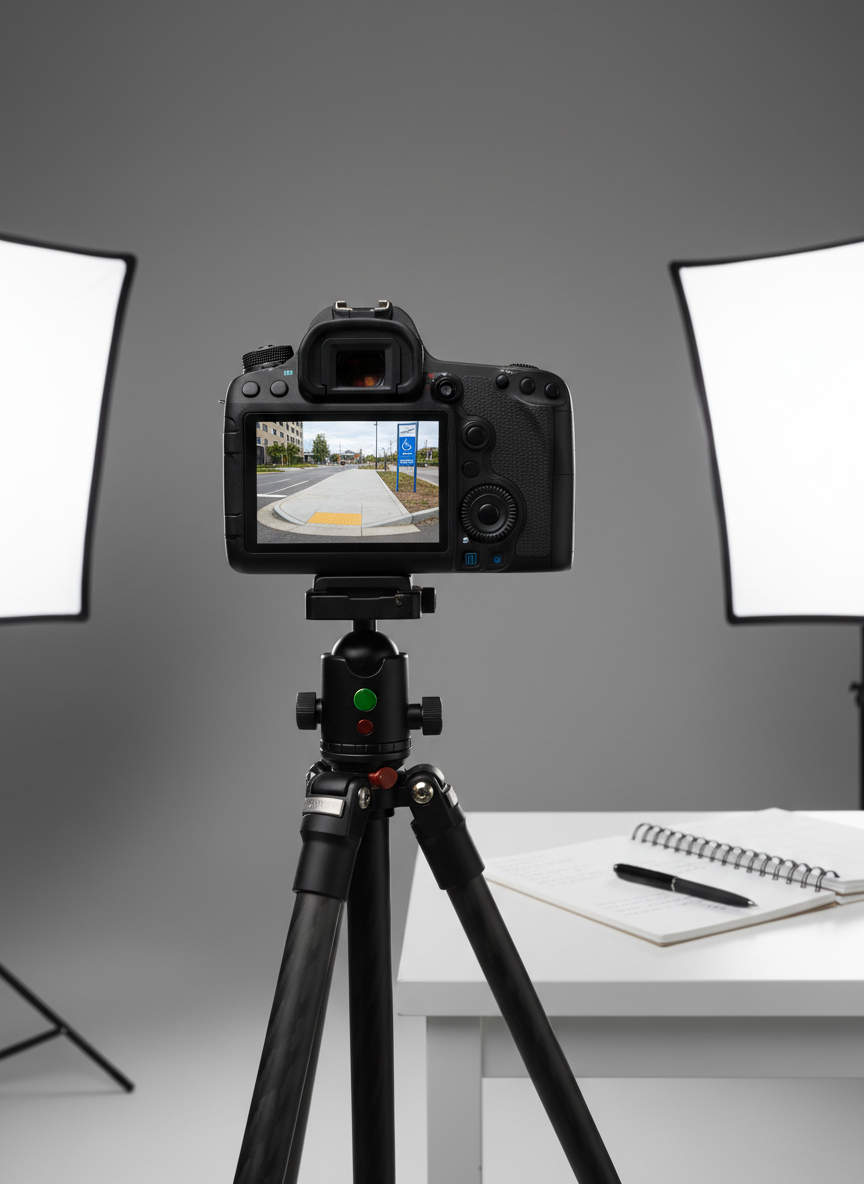
A meticulously detailed close-up of a modern, matte-black DSLR camera mounted on a sturdy tripod, its rear LCD screen glowing with a sharp, high-contrast image of an accessible city street: curb cuts, tactile paving, wide ramps, and clear signage. The camera stands in a minimalist studio environment with neutral gray walls and a tidy white table holding open notebooks and a pen. Soft studio lighting from two sides creates balanced illumination and gentle, realistic shadows, emphasizing textures on the camera body and tripod. Photographic realism, eye-level composition, and a calm, professional atmosphere communicate careful observation and documentation of disability-friendly environments.
A polished workspace scene featuring an open silver laptop on a light maple desk, its screen displaying a crisp, high-resolution graphic of an aperture icon gradually transforming into a universal accessibility symbol. Next to the laptop lies a spiral-bound notebook with neatly written notes and a pair of sleek, over-ear noise-canceling headphones. In the background, a bookshelf holds neatly arranged books on disability studies and inclusive design, slightly out of focus. Soft morning light from a nearby window washes the scene, casting long, gentle shadows and a warm, professional glow. Shot from a slightly elevated angle with shallow depth of field, the photographic image feels reflective and scholarly, emphasizing learning about disability through a focused lens.

Our Disability Lens

Through the Disability Lens invites readers to see disability through lived experience, fostering understanding, empathy, and inclusive action that expands perspectives beyond stereotypes and barriers.
A high-quality photographic image of a large, crystal-clear camera lens resting on a smooth, dark wooden desk. Reflected inside the curved glass elements are subtle, overlapping symbols of disability access: a wheelchair icon, a hearing loop symbol, a stylized brain, and a white cane, all softly distorted yet recognizable. The background is a gently blurred professional workspace with a laptop, notebooks, and a small plant. Cool, diffused daylight from an unseen window creates clean highlights along the metal rim and soft shadows on the desk. Shot at eye level with a shallow depth of field, the mood is thoughtful, professional, and inviting, emphasizing the idea of looking through the lens to see the full picture of disability.